The Building
New York’s original green museum, inspired by Burchfield.
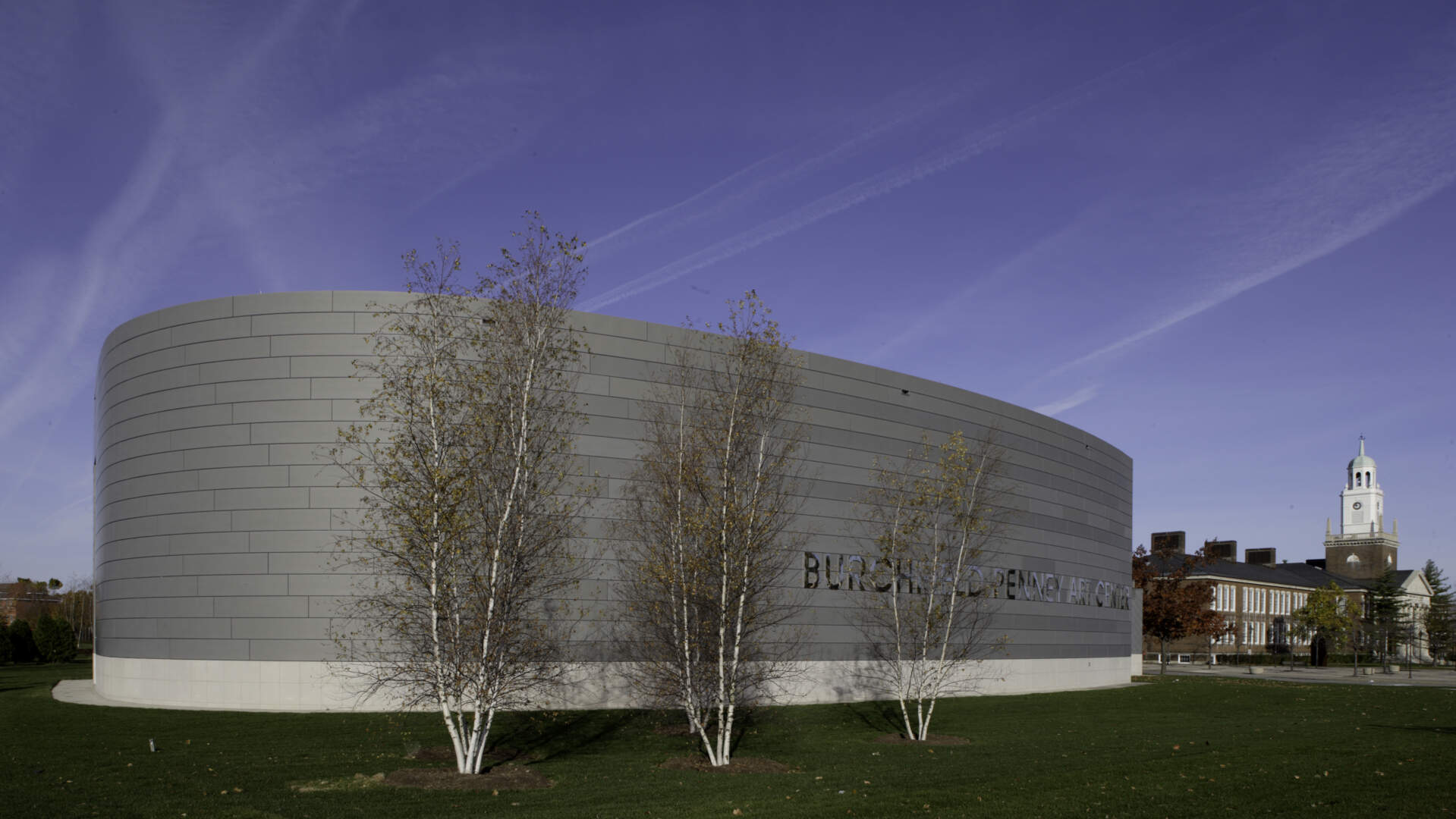
The 84,000 square-foot Burchfield Penney Art Center was designed by renowned architectural firm Gwathmey Siegel & Associates.
The museum features numerous tributes to namesake Charles E. Burchfield's love of nature, including open corridors, clear sightlines, and even ceiling lights arranged in the shape of the constellation Orion. The design team put as much thought into the placement of every wall, bench and window as Burchfield gave to every flower, tree, and star in his paintings.
Check out the Photo Gallery of the Building
Read about our Green Building (link to content below on page)
Architect: Gwathmey Siegel & Associates, Architects LLC
Principal: Charles Gwathmey
Groundbreaking: August 26, 2006
Ribbon-Cutting: September 5, 2008
Grand Opening: November 22, 2008
New York’s first green museum
The Burchfield Penney Art Center at SUNY Buffalo State is the first art museum in New York State to be certified by the U.S. Green Building Council’s (LEED) Leadership in Energy and Environmental Design program, having received a silver rating.
To qualify for certification, the museum met rigorous standards in the areas of site sustainability, water use and efficiency, reduced use of energy and atmospheric impact, use of materials and resources, improved indoor air quality, and innovation and design process.
Green Building Strategies
Examples of steps taken during the design and construction of the Burchfield Penney which earned credits towards LEED ® certification were:
Alternative Transportation,Low Emitting & Fuel Efficient Vehicles
According to the U.S. Government, in 2019, the United States consumed an average of about 20.54 million barrels of petroleum per day, or a total of about 7.50 billion barrels of petroleum products.
The intent of this credit is to reduce the environmental impact caused by automobile use. The Burchfield Penney will reserve three parking spaces in the south east corner of the parking lot for alternative fuel vehicles.
Development Density & Community Connectivity
By virtue of its location, the Burchfield Penney adds to the cultural density of the area and helps reinforce the notion of a Museum District. The proximity to Buffalo State College, the Albright-Knox Art Gallery, the Olmsted Parks, the Richardson Complex, and the Buffalo History Museum encourages the use of pedestrian walkways and public transportation from one venue to another.
Water Efficient Landscaping
The plantings which surround the Burchfield Penney were selected for their ability to thrive in our climate without the addition of artificial irrigation. On the west side of the building adjacent to the main entrance to the museum is an oak grove dedicated by Calvin Rand in memory of Patricia Rand. In the central parking median is another grove sponsored in honor of William J. Magavern II and his late wife, Louise Morris Magavern. These and other landscaping elements that surround the building consist of plants indigenous to the climate of the region.
Enhanced Refrigerant Management
Maintaining consistent temperature and humidity levels is especially important in an art museum in order to better preserve the artwork on display or in storage. All of the refrigerants used, heating and cooling systems at the Burchfield Penney are free of Ozone depleting chemicals—so not only is the building’s interior environment maintained, but also Earth’s environment as well.
Certified Wood
All of the wood products that went into the construction of the Burchfield Penney were certified by the Forest Stewardship Council, an independent, non-governmental, not for profit organization established to promote responsible management of the world’s forests.
Controllability of Spaces, Lighting
The charge of most museums is to not only provide a venue to view artwork, but also to protect and preserve artwork from damaging environmental conditions such as variable humidity and sunlight. Whereas daylight in the gallery spaces is minimized to protect the artwork; wherever possible, the building design provided for the introduction of daylight and views to the building occupants. All of the perimeter offices have large windows affording daylight and views out to the campus. A glass wall at the front of each office allows the daylight and the view to be shared by the interior workspaces as well.
Architecture
The two-story Burchfield Penney Art Center makes a dramatic aesthetic statement externally with carefully selected materials and with a deliberate color palette. Internally, long, dramatic vistas and open spaces with purposeful contraction and expansion of ceiling heights are experienced. The unique facility marries the function of the art museum with that of a learning center. A long concourse that contains an 80-foot staircase is illuminated by four massive skylights. It acts as a gathering space while connecting the program areas with visitor service amenities. The building is a highly functional facility of related program components, strategic design of physical spaces, and a straightforward circulation system. Galleries are provided for collections as well as flexible, changing exhibitions. An auditorium, classrooms, museum store, and café are located off the entry lobby on the first floor. The public reception room on the second floor borders an outdoor terrace. The boardroom and museum offices are accessible on the second floor via the grand staircase or elevator. Storage and service spaces are distributed on the first and second floors, providing critical adjacencies, but separating these functions from the public domain.
The Burchfield Penney combines image, efficiency, and flexibility into a composite assemblage. The building design is based on logical planning principles and creative massing strategies, resulting in a unique synthesis of form. The selected materials (exterior materials include zinc, manganese glazed brick, and cast stone) is intended to respond directly to the adjacent Albright-Knox Art Gallery and Buffalo State’s Rockwell Hall as contextual precedents, while creating a building that is articulated and modulated by its multiple forms, fenestration, and detail.